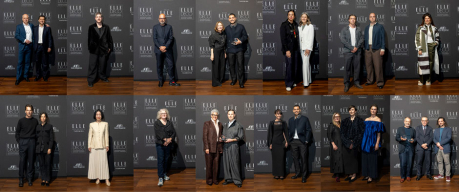

A-List
ELLE Deco International A-List: Asia
THE ELLE DECO INTERNATIONAL A-LIST brings together the year’s most remarkable interior design projects from across the globe. Selected by the Editors-in-Chief of the 25 ELLE Decoration editions, this annual showcase celebrates not only exceptional interiors, but also the talents who shape them. Discover the outstanding European projects of 2026.
China
WULINGSHAN EYE STONE SPRING
BY VECTOR ARCHITECTS
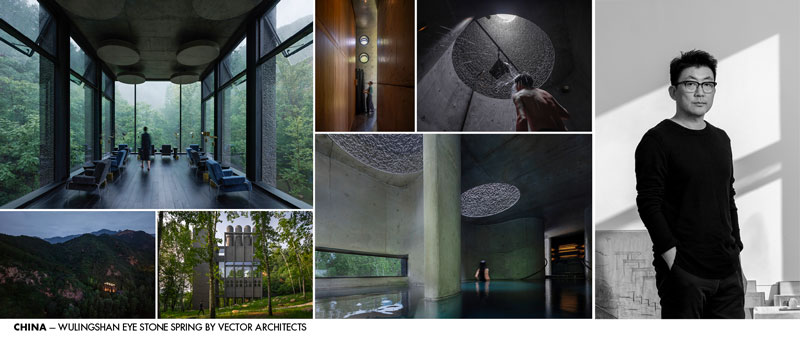
PHOTOS LIU GUOWEI; TIAN FANGFANG PORTRAIT BORIS SHIU
Retreat. Vector Architects has completed the Wulingshan Eye Stone Spring, a secluded hot spring retreat nestled in the forests of Wuling Mountain, Hebei. Designed by Dong Gong, the project hovers lightly above a river valley, its form supported by ten slender columns that minimize disturbance to the terrain. The spatial sequence unfolds over three levels: a teak-clad core housing reception and bathing facilities, a transparent lounge immersed in the landscape, and a rooftop of hot spring pools illuminated by eight light wells. Balancing structure and serenity, the design embodies Vector Architects’ poetic philosophy — transforming light, water, and nature into an architecture of reflection and renewal.
DONG GONG
Dong Gong founded Vector Architects in 2008. He was elected as a Foreign Member of French Academy of Architecture in 2019 and has been teaching design studios at Tsinghua University and Central Academy of Fine Arts. His practice has earned international recognition through his representative works, including Seashore Library, Pingshan Art Museum, Haibing Center at Nankai University and Jingyang Camphor Court. www.vectorarchitects.com
“An exceptional choreography of nature and structure, where the architecture frames light, landscape, and bathing as a profound, multi-sensory journey through the forest.”
— JUN LI, EDITOR-IN-CHIEF ELLE DECORATION CHINA
SERENE LIGHT GARDEN
BY SUN JIANYA
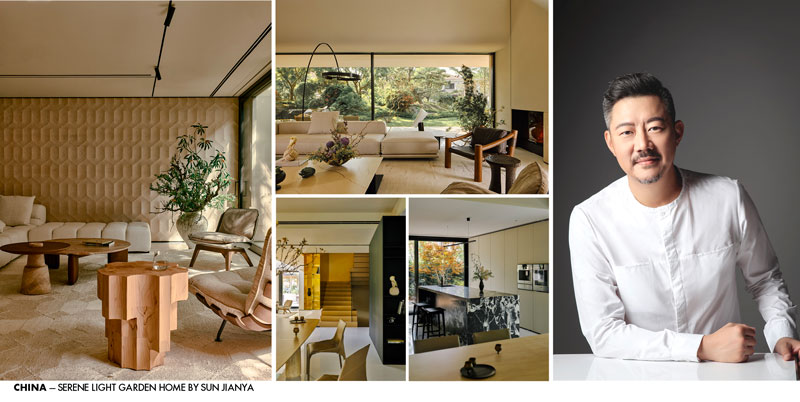 PHOTOS ZHU HAI PORTRAIT ©
Private Home. Contemporary living increasingly seeks harmony with nature. In China, the focus has shifted from ostentatious displays to genuine inner fulfillment. Guided by the belief that a home should be enveloped by nature, this private residence in Shanghai by Sun Jianya blurs the boundary between indoors and out. Sunlight filters through treetops, gently animating the interior with dappled light and quiet rhythm. “Having shimmering shadows nearby is a truly delightful experience,” says the designer. The architecture opens toward the landscape while preserving intimacy, forming an inward–outward dialogue that captures the essence of tranquil living. In every detail, the project reflects a return to authenticity—a poetic balance between modern comfort and the timeless calm of nature.
SUN JIANYA
Sun Jianya, a renowned Taiwanese interior designer, began his career in 1993 and moved to Shanghai in 2001. In 2009, he founded Yayi Design, known for its modern, elegant, and comfortable approach to spatial design. www.yayi.design
“Sun Jianya’s work carries the quiet wisdom of Chinese gardens — where space breathes, light lingers, and every detail reflects a deep understanding of human life and poetic living.”
— JUN LI, EDITOR-IN-CHIEF ELLE DECORATION CHINA
THE YARD
BY NERI&HU DESIGN AND RESEARCH OFFICE
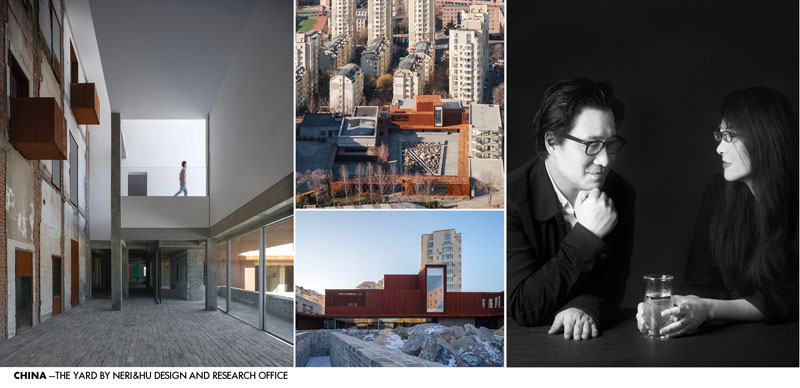
PHOTOS DONG; RUNZI ZHU PORTRAIT JIAXI YANG & ZHU ZHE
Cultural Center. The Yard by Neri&Hu is an adaptive reuse project in Dalian, China, transforming a 40-year-old compound into a mixed-use creative hub. Unifying six existing buildings, the design introduces a courtyard inspired by Chinese gardens, creating a contemplative refuge within the city. The scheme integrates galleries, retail, hospitality, and office spaces while preserving historic elements. A new system of walls, screens, and canopies enhances spatial cohesion, with a material palette of corten steel and raw finishes that embrace the site's industrial past and evolving character.
LYNDON NERI AND ROSSANA HU
Founded in 2006 by partners Lyndon Neri and Rossana Hu, Neri&Hu Design and Research Office are an interdisciplinary architectural design practice based in Shanghai. The practice’s burgeoning global portfolio includes commissions ranging from master planning and architecture to interior design, installation, furniture, product, branding, and graphic works. www.neriandhu.com
“With The Yard, Neri&Hu offer their reply to China’s post-boom call for meaningful regeneration—an urban landmark where past and present align, setting a new benchmark for adaptive reuse in China.”
— JUN LI, EDITOR-IN-CHIEF ELLE DECORATION CHINA
FENIX MUSEUM
BY MAD ARCHITECTS
 PHOTOS HUFTON+CROW, ARCH-EXIST, IWAN BAAN PORTRAIT GREG MEI
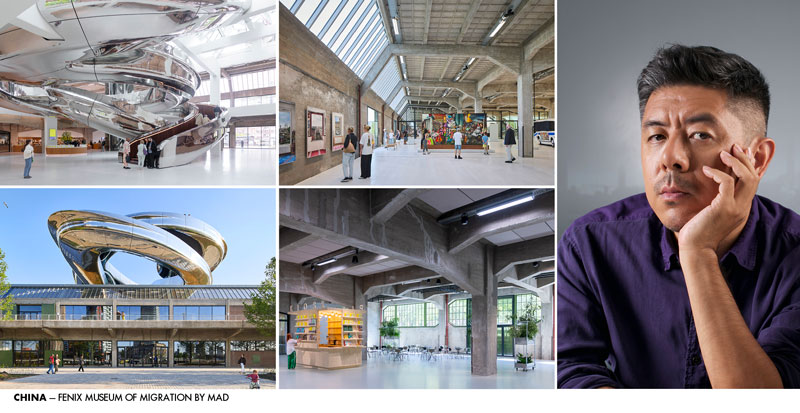
Museum. Rotterdam’s historic Fenix warehouse transforms into a cultural landmark, exploring the universal story of human migration. Originally built in 1923, the warehouse was once the world’s largest transshipment hub, a departure point for millions of migrants. The design preserves the building’s industrial character while integrating contemporary elements, such as a glass curtain wall that bathes the interior in natural light. At the heart of the transformation is the Tornado, a sculptural double-helix staircase that connects the floors and leads to a panoramic rooftop deck. Crafted from stainless steel and wood, this staircase symbolizes movement and transition, echoing the journeys of migrants. Spanning two floors, Fenix will house art, photography, and historical artifacts, with commissions from international artists enriching its narrative. Opened in 2025, Fenix bridges the past and future, inviting visitors to reflect on migration through architecture, history, and contemporary art. www.fenix.nl
MA YANSONG
Ma Yansong, founder of MAD Architects, is celebrated for his visionary, nature-driven, human-centered designs. With a master’s degree from Yale, he has taught at Yale, USC and Tsinghua University. His curatorial work, including the China Pavilion at the Venice Biennale, pushes architectural boundaries. In 2025, he was honored as one of the “TIME 100 Most Influential People” in the World. www.i-mad.cn
“Fenix Museum stands as a rare cultural hinge—where MAD transforms history’s weight into a floating architecture. It’s a landmark that doesn’t just frame the past, but translates regional memory, contemporary imagination, and public life into a coherent spatial narrative.”
— JUN LI, EDITOR-IN-CHIEF ELLE DECORATION CHINA
SUN TOWER
BY OPEN ARCHITECTURE
 PHOTOS JONATHAN LEIJONHUFVUD; IWAN BAAN PORTRAIT ©
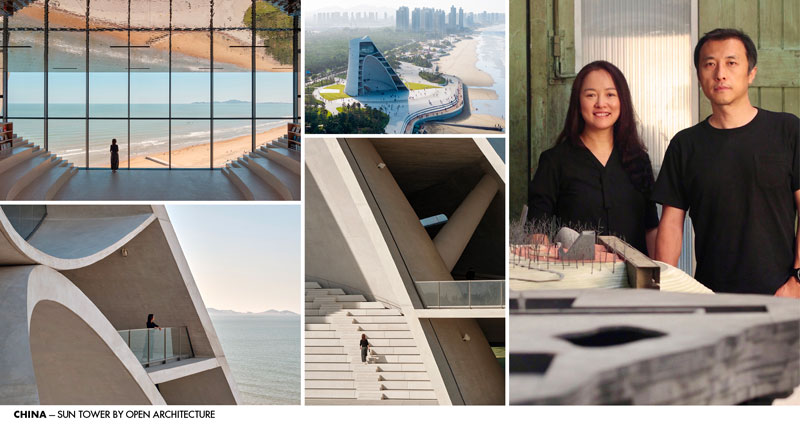
Cultural Center. Sun Tower is an oceanfront public cultural facility in Yantai Yeda Development Zone, featuring outdoor theater, digital exhibition spaces, library, café and bar. Atop the summit is a unique semi-outdoor “Phenomena Space”. The asymmetrical-cone shaped building seems to have been sliced open by beams of sunlight, revealing its internals to the majestic sea. While bringing much-needed cultural and communal facilities to this fast-developing industrial zone, Sun Tower also captures and transforms natural phenomena into tangible and visceral experiences. It is a new architectural typology that fuses ancient worship of nature with contemporary urban cultural life, a “lighthouse” paying tribute to nature and the passing of time.
OPEN ARCHITECTURE
OPEN Architecture was founded by Li Hu and Huang Wenjing, known for their forward-thinking designs that merge art, humanity, and the environment. www.openarch.com
“Sun Tower transforms light, time, and tide into architecture — a poetic landmark where contemporary culture meets the ancient awe of nature.”
— JUN LI, EDITOR-IN-CHIEF ELLE DECORATION CHINA
India
A HOME IN BAGALUR
BY GEORGE SEEMON OF STAPATI
 PHOTOS ISHITA SITWALA PORTRAIT TIMS
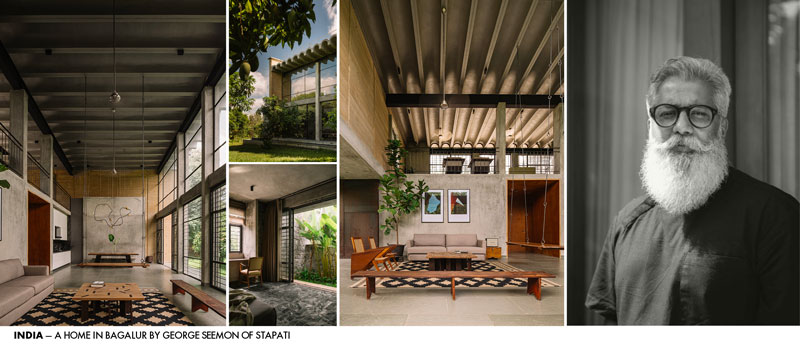
Private Home. Designed by George Seemon of Stapati Architects, this 2,690-square-foot matchbox-like home in Bagalur, Tamil Nadu, sits on a serene mango orchard at the Karnataka–Tamil Nadu border. Conceived as two interlocked volumes, it was built on the only tree-free patch of land to preserve the site’s natural character. Guided by a philosophy of simplicity and honesty in design, the home embraces essentialism through raw, local materials. Rammed-earth walls and stone details create a natural texture that ages beautifully with time. Key design features include a jack-arch roof that conceals services, bespoke furniture by Seemon, and vintage accents that add warmth. The atmosphere is tranquil and grounded, where architecture, landscape and light coexist to create an intimate connection with nature.
GEORGE SEEMON
Known for his meticulous attention to detail and innovative design approach, George has been instrumental in shaping numerous award-winning projects and continues to guide Stapati to new design frontiers. Under his leadership, the firm consistently upholds its commitment to innovation and quality. www.stapati.com
“An element of authenticity and coarseness runs throughout the home. It proves that architecture is not about perfection. You let the house live its life, and you live with it. It’s all part of the process.”
— MRUDUL PATHAK KUNDU, EDITOR-IN-CHIEF ELLE DECOR INDIA
A HOME IN HYDERABAD
BY AAMIR AND HAMEEDA INTERIOR DESIGNERS
 PHOTOS ISHITA SITWALA PORTRAIT RICKEN DESAI
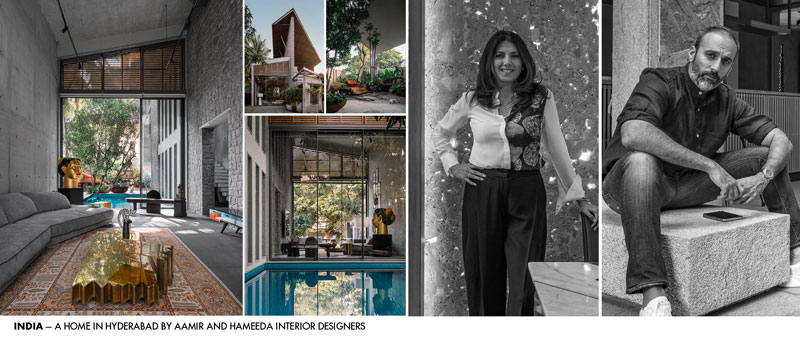
Private Home. This 6,000-square-foot residence in Hyderabad, India, is designed and built by architects Aamir and Hameeda Sharma on a tree-dense, rocky site. Guided by a philosophy of coexistence with nature, the home was envisioned to embrace its surroundings: preserving existing trees and using about 70% of excavated stone in constructing the structure of the home. The design celebrates indoor–outdoor harmony through open layouts, sloping roofs and large windows framing the verdant views. Locally sourced stone, neutral tones, and warm wood define the palette, while eclectic accents like a red Art Deco couch and a metallic donkey-shaped cabinet add personality. The atmosphere is one of tranquil immersion in nature: sunlit, lofted volumes, generous ventilation and large windows that frame the verdure outside. The emanating effect is a home that feels like an organic extension of its landscape.
AAMIR AND HAMEEDA SHARMA
Aamir started his practice alongside his wife Hameeda in the year 2000. Aamir’s style is unconventional, with a lot of sketches, design and details given on-site, courtesy of his out-of-the-box design sensibility and quick thinking. Hameeda, too, likes to deliver a project with a sense of the unexpected, but respecting her clients’ personalities. With her husband Aamir, she masterminds smart yet subtly glamorous interiors.
www.aandh.co.in
“The duo’s shared love and respect for nature shine through every aspect of the space. You can catch spectacular views of the lush foliage from every part of the house.”
— MRUDUL PATHAK KUNDU, EDITOR-IN-CHIEF ELLE DECOR INDIA
A HOME IN NEW DELHI
BY SACHIN AND NEHA GUPTA OF BEYOND DESIGNS
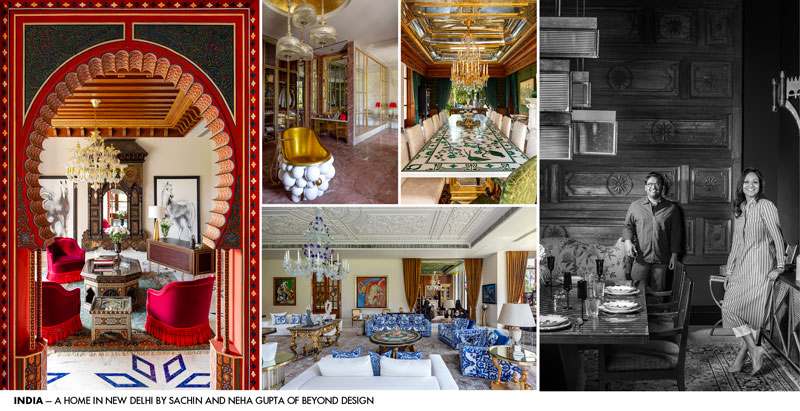 PHOTOS ATUL PRATAP CHAUHAN PORTRAIT ATUL PRATAP CHAUHAN
Private Home. Designed by Beyond Designs, led by Sachin and Neha Gupta, this 25,000-square-foot New Delhi residence is a lavish family home that unites art, antiques and architecture. Conceived as “maximalism with restraint,” it balances opulence with cohesion, blending collected treasures into a refined visual story. The design features handcrafted ceilings with painted tapestries, gold-leaf accents and rich materials such as malachite, marble and brass. A 20-foot dining table, sculptural furniture and vintage pieces highlight the firm's bespoke craftsmanship. Every room evokes a distinct mood yet flows harmoniously into the next. The atmosphere is immersive and layered, a blend of theatrical luxury and intimate warmth that transforms the home into a living gallery reflecting both grandeur and personality.
SACHIN GUPTA AND NEHA GUPTA
Interior designers by profession, choice, and passion, Sachin and Neha seamlessly align their careers with their hobbies. Sachin finds joy in transforming ideas from thoughts into tangible realities, whether through projects or furniture design. A strong advocate for positivity and living in the present moment, Neha values restrained ambitions, dedicating herself fully to her commitments to ensure every project receives her unwavering focus and energy. www.beyonddesigns.in
“At a time when quick turnarounds and pre-packaged aesthetics reign supreme, this house is a powerful instance of what happens when design has the luxury of time.”
— MRUDUL PATHAK KUNDU, EDITOR-IN-CHIEF ELLE DECOR INDIA
A HOME IN NEW DELHI
BY IRAM SULTAN
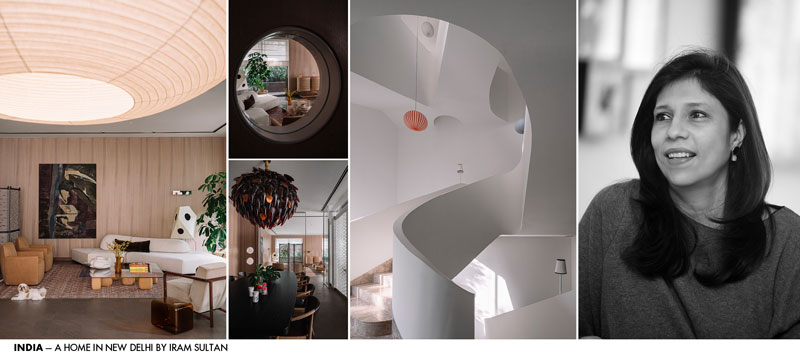 PHOTOS ISHITA SITWALA PORTRAIT GURMUKH SINGH
Private Home. The home of Gautam and Ruchika Baid in New Delhi, designed by the designer Iram Sultan, is a layered four-storey composition of friendship and design. Surrounded by lush trees, the vision was to create a residence that feels “visually porous, yet a snug embrace” — a space for warmth, laughter, art and belonging. Materially, the house pairs warm sesame marble floors and toasty wood, with glass-brick walls and distinctive veneer-striped surfaces. Signature furniture pieces (B&B Italia, Edra, Cappellini) offset custom cabinetry and dramatic light installations, including a deep-burgundy chandelier crafted for the dining room and sculptural glass lights in the stairwell. The atmosphere invites curiosity and movement: apertures, circular peepholes and a floating stair landing choreograph your experience, transforming the home into a welcoming art-filled sanctuary.
IRAM SULTAN
With 27 years of expertise in luxury residential design and boutique hospitality, Iram Sultan leads her eponymous studio in Gurugram. As Art Director at Sunday Design, she launched the brand’s furniture and lifestyle collections and defined the creative direction of all its stores across India. www.iramsultan.com
“Debates about design are the foundation of this home. Lovingly collected, hotly debated, each artwork carries its own anecdote.”
— MRUDUL PATHAK KUNDU, EDITOR-IN-CHIEF ELLE DECOR INDIA
A HOME IN VALSAD
BY STUDIO LAGOM
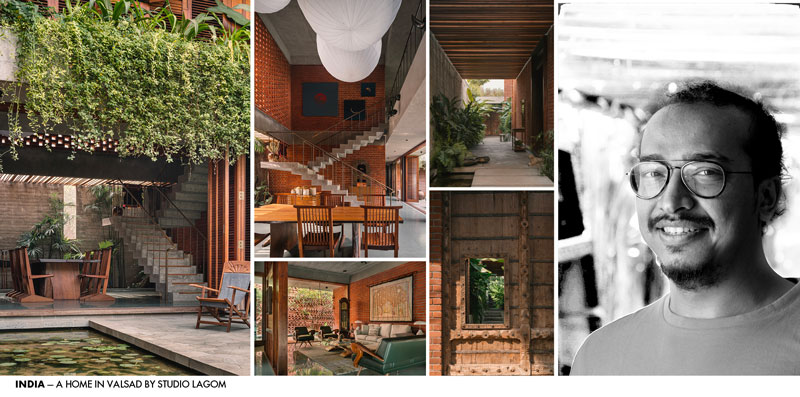 PHOTOS ISHITA SITWALA PORTRAIT IRA GOSALIA
Private Home. The bungalow in Valsad, Gujarat, originally built in 1939, was restored and transformed by Studio Lagom for the Desai family. The concept focused on honouring the home’s layered history, preserving its heritage and memories while opening it to contemporary, light-filled living. The original water well and lotus pond anchor the C-shaped layout, seamlessly linking the indoors and outdoors. Exposed brick walls, Kota stone floors, and reclaimed timber from the old structure appear in shutters and stair treads. A floating concrete staircase, sliding-folding courtyard doors, skylights, and louvred windows enhance openness and ventilation. The atmosphere feels calm, rooted, and tactile, blending brick, timber, and greenery with natural light. This restoration captures the essence of timeless living, creating a home that feels both familiar and refreshingly new.
HARDIK SHAH
After working at architectural studios across India, Hardik chose to establish Studio Lagom in 2011, driven by his vision for a disciplined architectural practice. The studio aims to transform India’s fragmented architectural landscape by prioritising material purity over excessive layering. Studio Lagom creates spaces that harmonise function, culture and nature. www.studiolagom.in
“Studio Lagom designed the home to be inclusive, devoid of any barriers, so that it is easily navigable by all. All around, louvred, sliding-folding windows serve as a flexible boundary — opening to welcome nature in, and closing to create a cocoon of privacy.”
— MRUDUL PATHAK KUNDU, EDITOR-IN-CHIEF ELLE DECOR INDIA
Japan
AOI CELESTIE COFFEE ROASTERY
BY YUKO NAGAYAMA
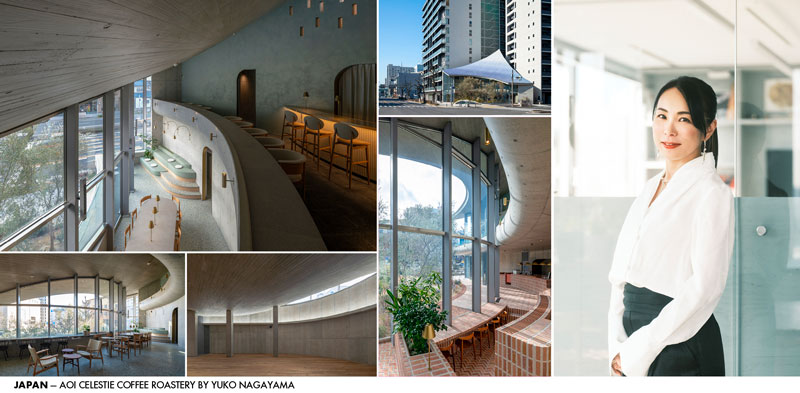 PHOTOS NOBUTADA OMOTE PORTRAIT KOHEI WATANABE
Hospitality. AOI Celestie Coffee Roastery is a three-storey café and roastery with an underground event hall, located at the corner of Nishiki-dori Street and Route 153 in Nagoya. Developed by a local logistics company as part of a community-revitalization effort, the building is organized around a central courtyard and defined by a distinctive roof that seems to have gently “fallen” between the surrounding high-rises. There is a boccia court in the basement that can also be used as multipurpose event space. The café spans the first and second floors, where recessed seating along the courtyard offers quiet views of olive trees. On the third floor, a bar tucked beneath the sweeping roof overlooks both the interior and the city. Clad in blue-gradient tiles from Tajimi, the roof reflects changing sky conditions, giving the project a light, airy presence. AOI Celestie emerges as a new urban landmark, an inviting cultural space in the heart of Nagoya. www.aoi-celestie.com
YUKO NAGAYAMA
Yuko Nagayama founded Yuko Nagayama & Associates in 2002 after working at Jun Aoki & Associates. Her projects—from luxury stores to landmark towers—blend light, space and narrative, earning her global recognition and awards while re-imagining architecture’s role in the city. www.yukonagayama.co.jp/en-about/
“Yuko Nagayama is one of Japan’s most prominent architects, having designed two pavilions for the Expo 2025 Osaka Kansai. This project stands out as a city landmark not for its scale, but for its intelligent, site-specific design.”
— TARO KIGUMA, EDITOR-IN-CHIEF ELLE DECOR JAPAN
HAND-IN-HAND HOUSE
BY NENDO
 PHOTOS MASAHIRO OHGAMI PORTRAIT ALLAN ABANI
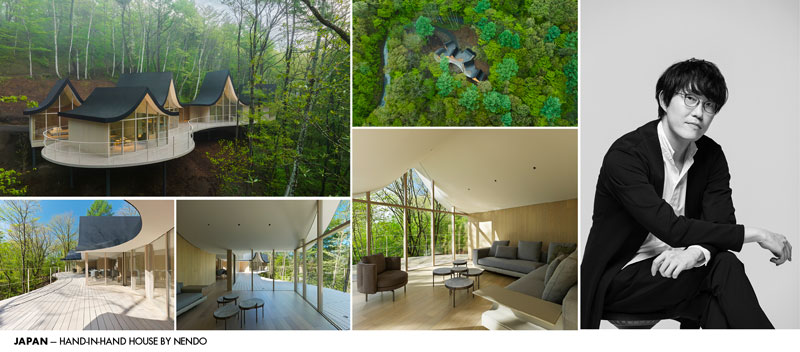
Private Home. Set on a hilly 5,800㎡ site in Karuizawa, this weekend house for a family of four is organized around a generous terrace projecting over the slope, opening to lush forest and views of Mt. Asama. Six compact “cottages,” each with a specific function—living, dining, kitchen, or bedrooms—are arranged along the terrace at slight angles and with varied roof heights, allowing the architecture to blend naturally with the terrain. Though independent, the cottages connect seamlessly under a continuous roof whose gently linked forms evoke “a family holding hands.” The result is a thoughtful balance between shared spaces and private retreat, where each family member can enjoy solitude without losing a sense of closeness. The design reflects nendo’s distinctive approach: site-sensitive, quietly inventive, and guided by Oki Sato’s signature blend of clarity and playfulness.
NENDO, OKI SATO
nendo, led by Oki Sato, is a Tokyo-based design studio founded in 2002 known for its elegant simplicity and playful creativity. Sato, listed among the "100 Most Respected Japanese" by Newsweek, blends architecture, product design and storytelling to create spaces and objects that resonate emotionally. www.nendo.jp
“The creative source of Oki Sato seems to hold only ideas beyond our imagination. I wanted the world to know that this residence, too, is a plan guided by a sensibility entirely different from that of ordinary architects—and a highly challenging one at that.”
— TARO KIGUMA, EDITOR-IN-CHIEF ELLE DECOR JAPAN
MAMEYA
BY NEW MATERIAL RESEARCH LABORATORY
 PHOTOS MASATOMO MORIYAMA PORTRAIT GOITAMI
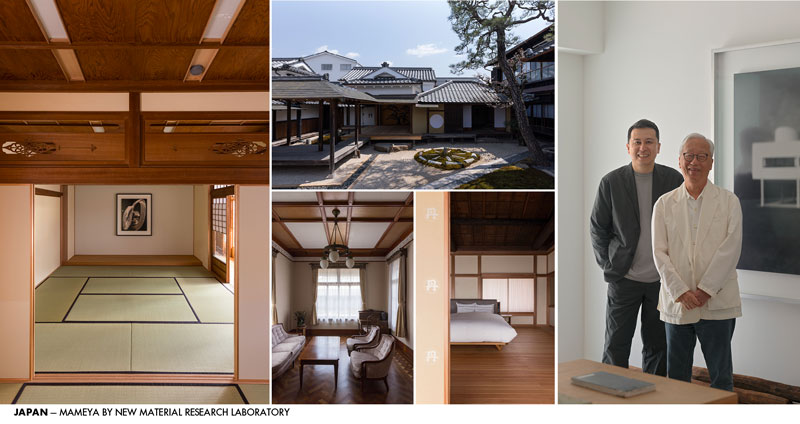
Hospitality. The ten buildings of Odagaki Shoten, constructed between the late Edo and early Taisho periods, were designated as Tangible Cultural Properties of Japan in 2007. In 2018, a restoration project led by the New Material Research Laboratory began to preserve the legacy of black soybean culture and revitalize the Tamba-Sasayama community. Completed in 2025, two buildings were transformed into Mameya, a private villa that combines traditional architecture with modern design. The renovation retains original wooden structures and incorporates serene gardens of black stones and moss, reflecting the essence of Japanese aesthetics. Interior details include calligraphy by Hiroshi Sugimoto and karakami paper sliding doors that filter soft light. Mameya offers guests an immersive stay where historical architecture, local culture, and contemporary art coexist in harmony. The renovation of this black soybean wholesaler, founded in 1734, draws inspiration from the refined elegance of Taisho-period merchant architecture, combining traditional wooden trusses with modern seismic reinforcements. The project, realized by the New Material Research Laboratory, revives this culturally significant building for contemporary use while preserving its historical identity and craftsmanship. www.mameya.odagaki.co.jp/our-story
NEW MATERIAL RESEARCH LABORATORY (Shinsoken)
Founded in 2008 by artist Hiroshi Sugimoto and architect Tomoyuki Sakakida, New Material Research Laboratory (Shinsoken), reinterprets ancient materials and techniques for contemporary architecture, preserving and refining traditional craftsmanship while challenging the uniformity of modern construction. www.shinsoken.jp
“Thanks to this exceptional project, the New Materials Research Laboratory reminded us once again that it possesses the ability to breathe new life into buildings that have stood for nearly 300 years, imbuing them with a narrative relevant to the modern era.”
— TARO KIGUMA, EDITOR-IN-CHIEF ELLE DECOR JAPAN
SKAC(SKWAT KAMEARI ART CENTRE)
BY DAIKEI MILLS (KEISUKE NAKAMURA)
 PHOTOS DAISUKE SHIMA PORTRAIT ©
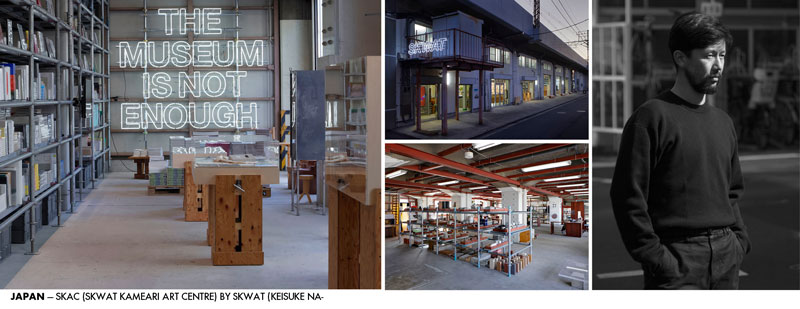
Cultural & Art Projects. Situated in Tokyo’s eastern suburbs, SKAC serves as a creative hub where visitors can experience art, design, architecture, food, music, and nature. The under-track space—stretching about 800 meters—is being redeveloped to include new shops, cafés, and pedestrian passages that connect the north and south sides of the railway. By linking the station area with nearby residential zones, the project encourages new forms of local activity and interaction, revitalizing the urban landscape and fostering a vibrant cultural network between Kameari and Ayase. SKWAT is a project led by Keisuke Nakamura, founder of the design office DAIKEI MILLS, that temporarily occupies and reimagines unused urban spaces. Established in 2019 and inspired by London’s “squatting” culture, Nakamura’s initiative—distinct from conventional client work—spontaneously transforms urban voids into creative environments, culminating in the evolution of SKAC. www.instagram.com/skwat.site
DAIKEI MILLS (KEISUKE NAKAMURA)
Keisuke Nakamura founded DAIKEI MILLS in 2011, exploring the relationship between people and space through architecture and design. In 2019, he launched SKWAT, reimagining unused urban voids, and has taught at Tama Art University since 2021. www.daikeimills.com
“I am closely following Keisuke Nakamura’s work in discovering new value in urban ‘vacant land.’ I see this Kameari project as the culmination of the achievements he has built since beginning this initiative in 2019, and at the same time, as a step toward a future with the potential to significantly elevate the town.”
— TARO KIGUMA, EDITOR-IN-CHIEF ELLE DECOR JAPAN
Korea
HOUSE IN CHEONGUN-DONG
BY HYOYOUNG KIM
PHOTOS YONGJOON CHOI PORTRAIT HYEONKI YOON
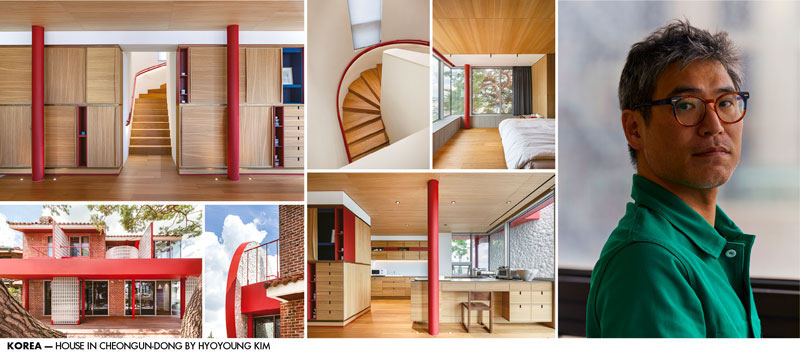
Private Home. House in Cheongun-dong is a remodel of a 1987 hillside residence in Seoul, redesigned by architect Hyoyoung Kim of Khy Architects. Guided by a belief in the expressive power of contrast, the project transforms an aging brick house into a bold composition of materials and forms. Red-painted steel columns, glass-block walls, and a vivid red metal entrance door counterbalance the original weathered brick, celebrating difference rather than uniformity. The atmosphere is at once nostalgic and contemporary: a home that embraces memory while opening a new chapter. Custom-built furniture and meticulously crafted elements create a tactile, almost artisanal presence, echoing the spirit of the client’s mother, renowned moon-jar artist in Korea. The home’s balcony captures sweeping views of pine trees, sky, and the Bugaksan ridgeline, grounding the project in its remarkable natural landscape.
HYOYOUNG KIM
Hyoyoung Kim is a Seoul-based architect known for expressive, detail-driven design exploring contrast, materiality, and time. His work merges craft and structure to create emotionally resonant spaces, revealing questions that connect architecture to contemporary life. www.khyarchitects.com/project
“It stands out for transforming a 1987 home into a powerful contemporary space through bold contrasts of materials and color. Rather than erasing the past, the project embraces memory and context, translating them into a distinctive architectural narrative.”
— EUNMI CHAE, EDITOR-IN-CHIEF ELLE DECOR KOREA
BIUM
BY DAEKYUN KIM
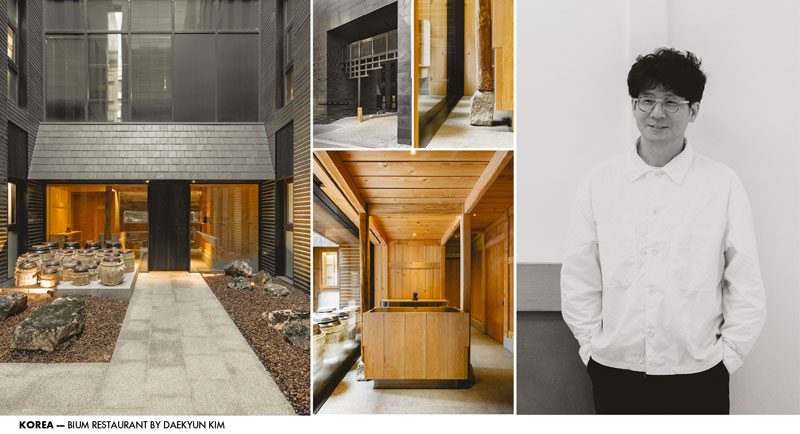
PHOTOS SUNGJAE PARK PORTRAIT SUNGJAE PARK
Restaurant. Bium is a modern Korean fine-dining restaurant in Seoul, created by Michelin-starred chef Daechun Kim (formerly of Seventh Door) in collaboration with architect Daekyun Kim, principal of ChakChak Architecture Office (ChakChak Studio). The restaurant reinterprets traditional Korean culinary philosophy—rooted in vegetable-focused temple cuisine and the idea that “emptiness (無) gives rise to being (有)”—into both food and space. The architecture reflects Korean spatial heritage through a serene garden entrance, a slate-roof structure recalling traditional tiled roofs, and a large gate inspired by the Hongsalmun, reinterpreted in a contemporary form. Natural materials such as wood, stone, and hanji paper are layered with artisanal precision, creating a meditative atmosphere where silence and restraint reveal depth. Every detail, from structure to custom furniture, is crafted to embody the philosophy of refined simplicity. www.biumseoul.com
DAEKYUN KIM
Daekyun Kim is the founding principal of ChakChak Architecture Office, known for examining traditional Korean construction methods and reinterpreting them within contemporary architecture. His work merges precision and restrained beauty to create deeply resonant spatial experiences. www.chakchakchak.com